Newsela launched in 2013 with a bold mission: Meaningful classroom learning for every student. Today, our team constantly strives to deliver powerful solutions that inspire our users.
Artificial intelligence (AI) is already shaping K-12 classrooms, and it’s advancing faster than our district policies and guidance. Students and their teachers are using AI tools for writing, feedback, and planning—which means AI in schools isn’t a future issue, but an immediate leadership consideration.
For K-12 admins, the focus is on establishing clear expectations for responsible AI use. This includes governance, data privacy, instructional quality, and AI literacy to ensure technology supports learning without introducing unnecessary risk.
[The current state of AI in K-12 schools](id-state)
Key takeaways:
AI use is already widespread across K-12 schools, often without formal district guidance.
Policy and governance struggle to keep up with classroom realities, increasing risks for schools.
Your leadership matters in setting clear, responsible expectations for AI use.
Artificial intelligence (AI) is already part of daily life in K-12 schools. Students are using it to help with writing and ideas. Teachers are using it to plan lessons, give feedback, and save time. In many cases, this is happening whether or not the district has clear AI guidance in place. For school and district leaders, that makes AI in school a present-day leadership issue, not a future one.
The challenge isn’t stopping AI use. It’s deciding how AI should be used, where it fits into instruction, and how to protect students and educators along the way. When districts don’t set clear expectations, AI use can vary widely from classroom to classroom, creating risk and confusion.
What does AI adoption look like across K-12 schools today?
Across the country, students and educators are already experimenting with AI tools. Research shows that they’re using AI to write drafts, brainstorm ideas, provide feedback, and support instruction. But this is all happening before districts have fully planned out how to handle AI in their schools.
National leaders are paying attention. They’ve called for expanding AI education and literacy, recognizing that students are already encountering AI in learning and daily life. For administrators, this confirms the truth: AI exposure is already happening, with or without a district rollout plan.
Who uses AI the most: Students, teachers, or districts?
Right now, students and teachers are moving faster than districts. Educators are testing AI to speed up planning and feedback, while students are using it to help with writing and schoolwork. At the same time, many districts are still figuring out policies, expectations, and guardrails.
This gap can create problems. When AI use grows without clear district guidance, expectations differ from classroom to classroom. Over time, that inconsistency can affect equity, academic integrity, and trust. Clear leadership helps ensure AI supports learning instead of muddying it.
What does the nationwide data say about AI policies?
In many districts, AI use is already ahead of formal policy. More than half of U.S. states have released guidance on AI in education, showing how quickly schools have to respond. Still, state guidance doesn’t replace the need for clear local politics that reflect your district’s values and priorities.
The U.S. Department of Education has encouraged schools to focus on responsible use rather than blanket AI bans. It cites the importance of governance, professional learning, and AI literacy to advance—rather than deter—student and educator AI use. When you acknowledge this policy gap, you can move from reacting to AI use to leading it with purpose.
[How K-12 educators are using AI](id-use)
Key takeaways:
Teachers are using AI to save time and support instruction, not replace teaching.
Students are using AI to help with writing, ideas, and feedback, often independently.
Without shared guidance, AI use can vary widely, leading to inconsistent expectations across classrooms.
AI use in schools isn’t limited to one subject, grade level, or role. It shows up in daily classroom routines, planning time, and student work. Understanding how AI is actually being used helps you set realistic expectations and avoid policies that don’t match classroom realities.
How are teachers using AI to support instruction and assessment?
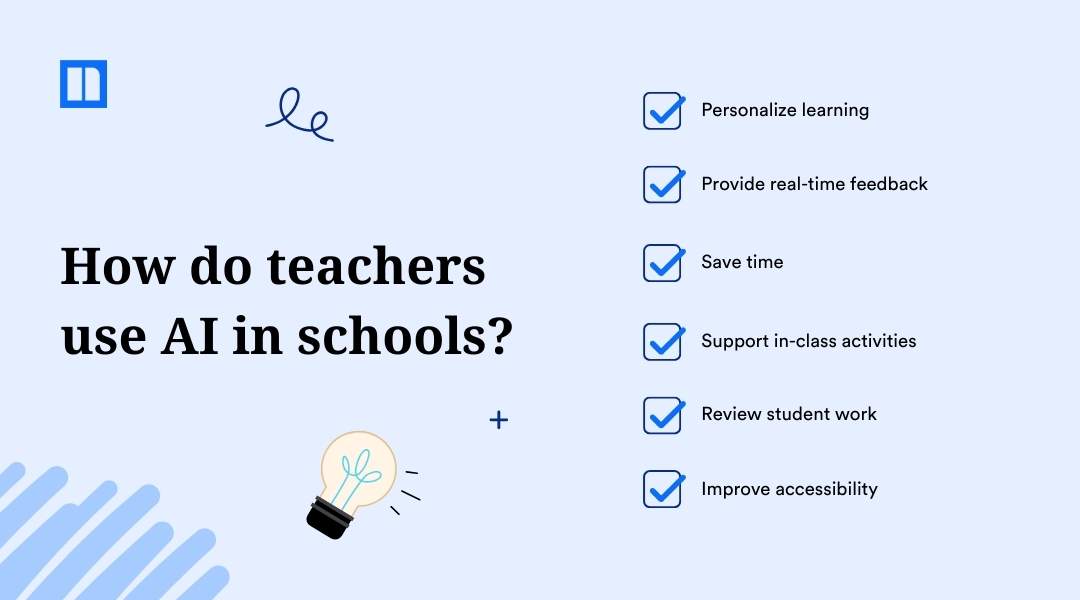
Teachers are using AI in simple, practical ways to save time and support students. Most uses help teachers do their jobs more efficiently, but don’t replace traditional teaching. Common ways teachers are using AI include:
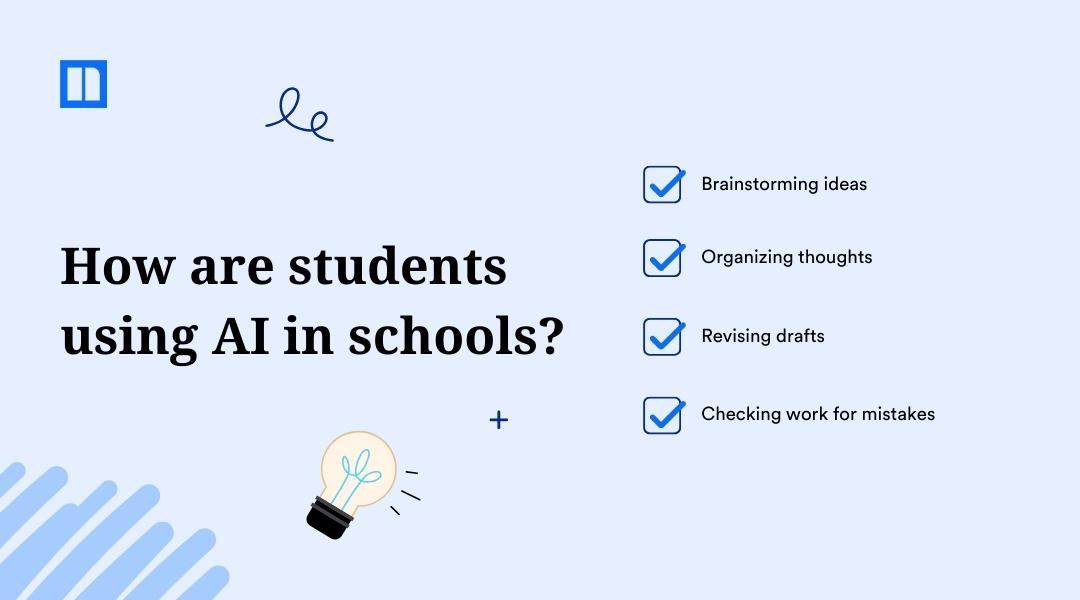
Brainstorming ideas before starting an assignment.
Organizing thoughts with outlines.
Revising drafts to improve clarity.
Checking work for mistakes or missing pieces.
Much of this work happens outside of lessons rather than during them. Without clear guidance, students may be unsure what’s allowed and what crosses a line from learning tools into plagiarism. Shared expectations help students use AI as a learning tool rather than a shortcut.
Why does unsupervised AI create inconsistencies across classrooms?
When teachers and students are left to decide what to do on their own, AI use can look very different from one classroom to another. One teacher may allow AI for early drafts while another may not allow it at all.
National reports show many districts are trying to bring more consistency by setting clearer expectations for AI use. Clear guidance helps reduce confusion and supports fair, consistent learning experiences.
[Benefits of AI for schools with responsible implementation](id-benefits)
Key takeaways:
AI can save teachers and school leaders time when used thoughtfully.
AI can support learning and access for more students when there are clear expectations.
The benefits depend on leadership, not just the tools themselves.
When students and teachers use AI with clear rules and purpose, it can support teaching and learning in real ways. The biggest gains come when districts guide how AI is used instead of leaving decisions up to individual classrooms. Responsible use helps you improve instruction, support students, and protect staff time without losing oversight.
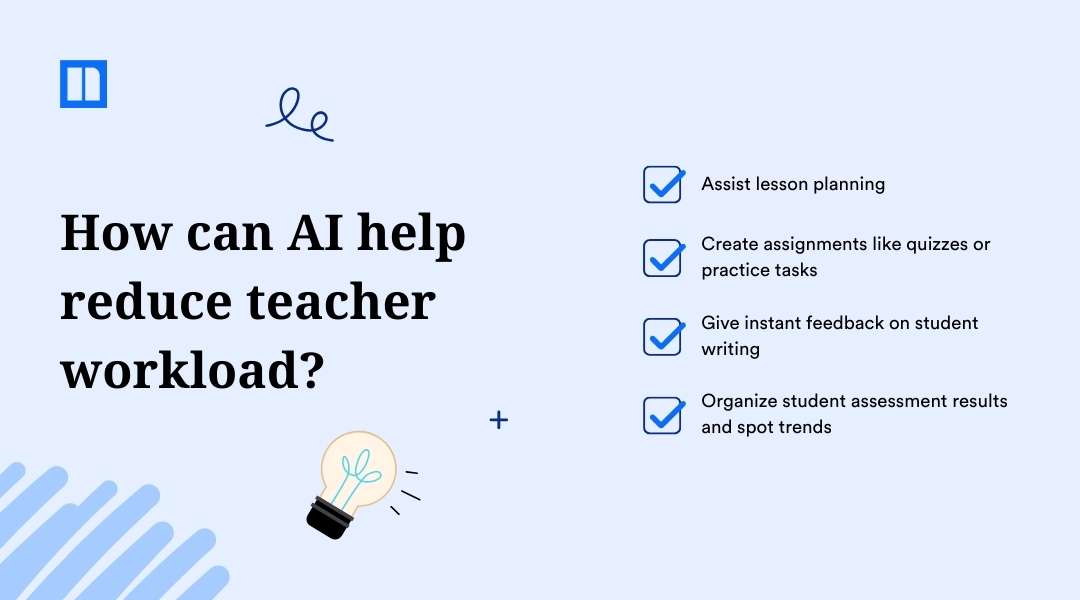
How can AI reduce workload for teachers and school leaders?
Planning lessons by generating starting ideas or questions.
Creating assessments like quizzes or practice tasks.
Giving feedback on student writing or short responses.
Organizing information from student work to spot trends.
As a leader, this matters because time is a limited resource for you and your teachers. When they spend less time on routine tasks, they can focus more on instruction, relationships, and student support.
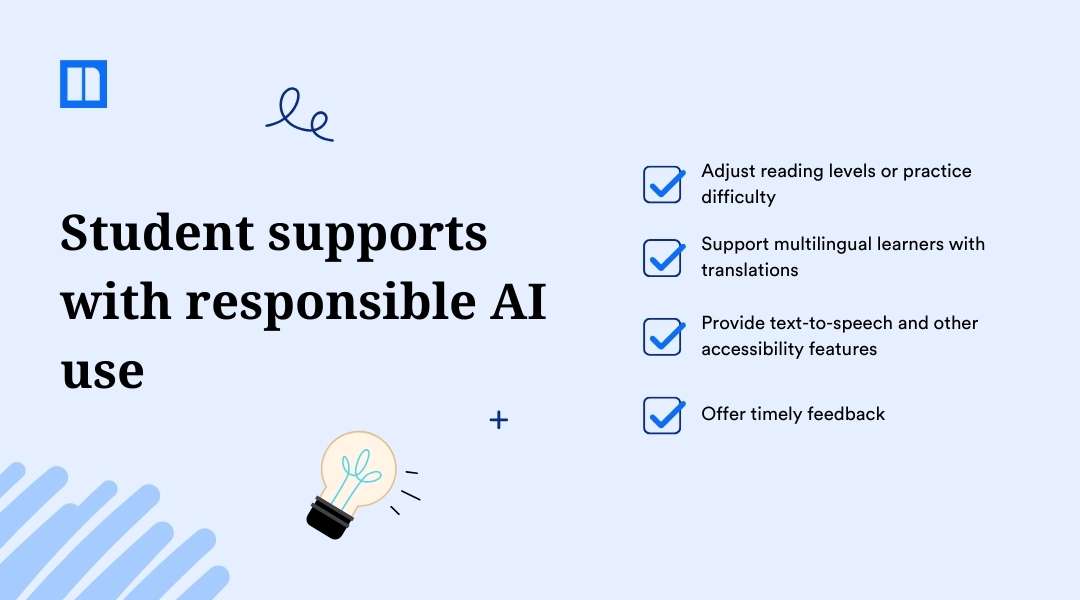
How can AI support personalization and access for students?
AI tools can help meet students where they are, especially for language and learning needs. Federal guidance reinforces that AI can support accessibility and differentiated instruction when used carefully. Responsible AI use can support students by:
Help teachers give faster feedback during lessons.
Support checks for understanding without extra grading time.
Highlight common misunderstandings so teachers can adjust instruction.
[Risks and challenges of AI in schools](id-challenges)
Key takeaways:
Student data and privacy require district-level oversight.
Bias and misinformation can affect learning if students use AI unchecked.
Overuse of AI can weaken critical thinking and writing skills.
AI can support learning, but it also introduces risks when used without clear rules. These challenges aren’t reasons to avoid AI completely. Instead, they highlight why your district leadership matters. When risks are ignored orleft to individual classrooms to manage, problems can grow quickly.
What data privacy and compliance risks should schools consider?
AI tools often collect and process large amounts of data. In schools, that data may include student work, names, or learning patterns. Federal laws like the Family Education Rights and Privacy Act (FERPA) and the Children’s Online Privacy Protection Rule (COPPA) place responsibility on districts, not individual teachers, to protect students’ information.
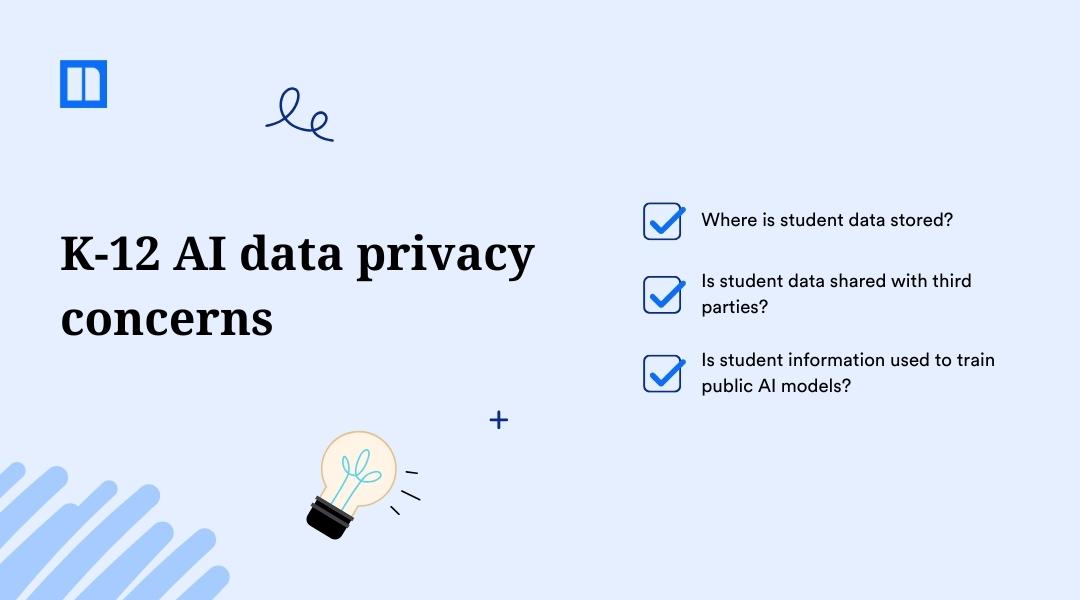
Key privacy concerns with AI typically include:
Where is student data stored?
Is student data shared with third parties?
Is student information used to train public AI models?
The U.S. Department of Education encourages districts to review AI tools carefully and understand how they collect and use student data before allowing them in classrooms. Clear guidance helps you protect students while giving educators safe tools to use.
For example, Newsela products follow industry standards to ensure student privacy, and we comply with regulations like FERPA and COPPA. We also don’t send teacher or student data to outside large language models (LLMs) like ChatGPT.
Why does bias and misinformation matter in K-12 settings?
AI tools learn from large sets of data, and those data sets may include bias or errors. As a result, AI may produce misleading, incomplete, or just plain wrong answers. Studies have shown that AI tools can reflect bias related to language, culture, and identity.
Teachers, schools, and districts need to be especially careful because students may trust AI outputs without questioning the results. Teaching students to think critically about AI responses and check sources is an important part of responsible use.
If your teachers are looking for guidance on how to teach AI literacy in their classrooms, you can share the following tips that they can pass on to students:
Explain how AI is a tool for research, not the authority on any subject.
Teach students about AI hallucinations: When a tool produces information that’s incorrect and misleading but appears true.
Remind students how to validate sources and fact-check information when doing any research, including with AI.
How can over-reliance on AI affect student learning?
When students rely too much on AI, they may skip important thinking steps. Writing, problem-solving, and revision are key parts of learning. If AI does too much of the work, students miss chances to build those skills.
Research and guidance suggest that AI should support learning, not replace it. Clear expectations help students understand when AI is appropriate and when they’re expected to think, write, and solve problems on their own.
Why do plagiarism and cheating remain major concerns with AI?
One of the biggest concerns educators raise about AI is cheating. Teachers worry that students may use AI to generate full essays, solve math problems, or complete assignments without doing the thinking themselves. These concerns are one reason some schools choose to limit or avoid AI use altogether.
Research and reporting confirm these are widespread worries. Educators mention uncertainty about how to tell the difference between appropriate support and misuse, especially when AI tools don’t clearly cite sources or explain where their information comes from.
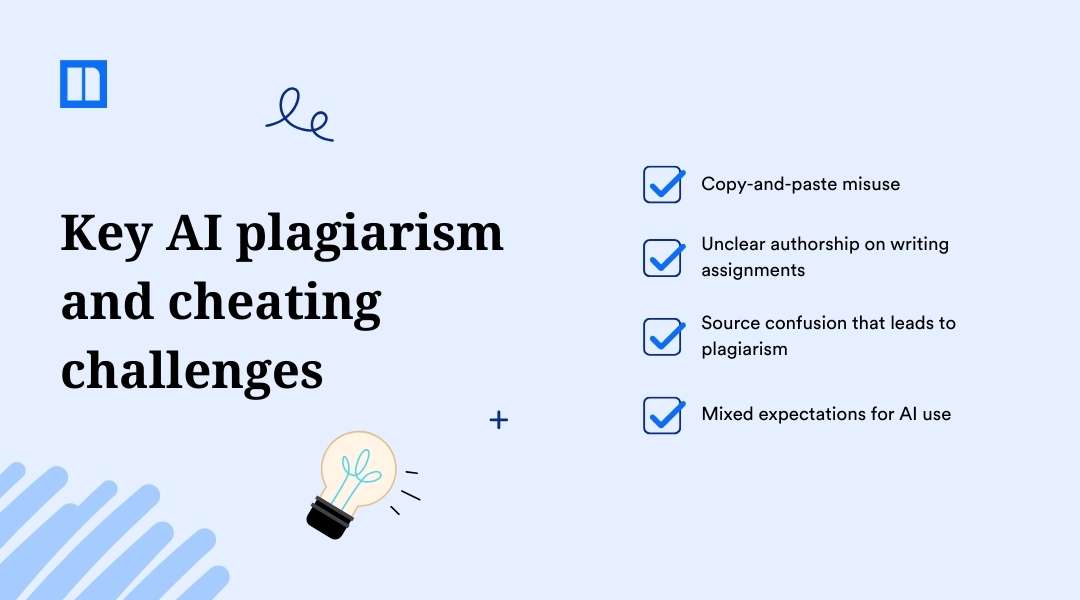
Key challenges schools and districts face with AI, plagiarism, and cheating include:
Copy-and-paste misuse where AI replaces student work.
Unclear authorship for writing assignments.
Confusion about plagiarism since AI often blends information from many sources.
Mixed expectations when rules differ by classroom or teacher.
Rather than banning AI, many experts recommend setting clear expectations for ethical use. This includes allowing AI for tasks like brainstorming, outlining, or proofreading, but making it clear that students are responsible for the final finished product. When districts lead these conversations, teachers are better supported, and students receive consistent messaging about academic integrity.
[Governance, policy, and responsible AI leadership](id-policy)
Key takeaways:
Clear guidance works better than bans when using AI in schools.
Human oversight should always be involved, even when using AI tools.
Strong policies and evaluation processes create consistency and trust across a district.
AI doesn’t manage itself. Without clear direction, schools can be left reacting to problems instead of preventing them. Governance is how districts move from uncertainty to clairity. Set expectations so your educators and students understand how AI should be used across classrooms.
What does responsible AI governance look like in K-12 schools?
Responsible AI governance means setting clear expectations for how to use and not use AI tools. It doesn’t mean approving every tool or banning AI completely. Instead, it focuses on aligning AI use with learning goals, student safety, and district values.
Approved tools or platforms that meet privacy and safety standards.
Defined boundaries for acceptable and unacceptable use.
Ongoing review rather than one-time decisions.
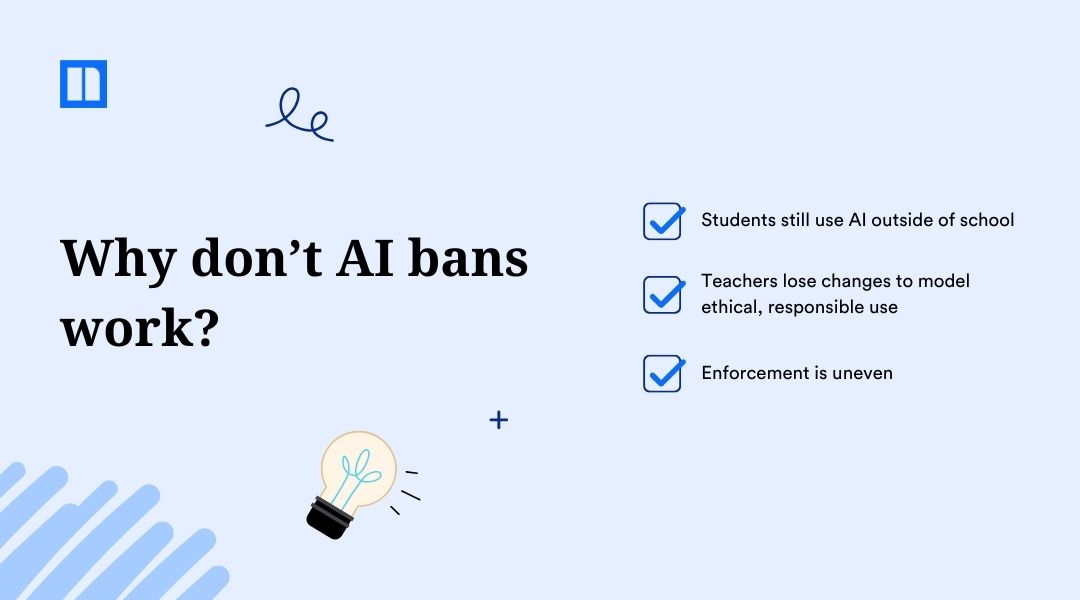
Why don’t AI bans work in schools?
When concerns about AI happen, banning tools can feel like the safest option. In practice, bans are hard to reinforce and often create more confusion than clarity. When you ban AI:
Students may still use AI outside of school without guidance.
Teachers lose opportunities to model ethical, responsible use.
Enforcement is uneven and leads to mixed expectations.
Research and policy guidance increasingly recommend setting clear rules and teaching responsible use instead of trying to eliminate AI entirely. Governance helps schools guide behavior instead of chasing after it and trying to catch up.
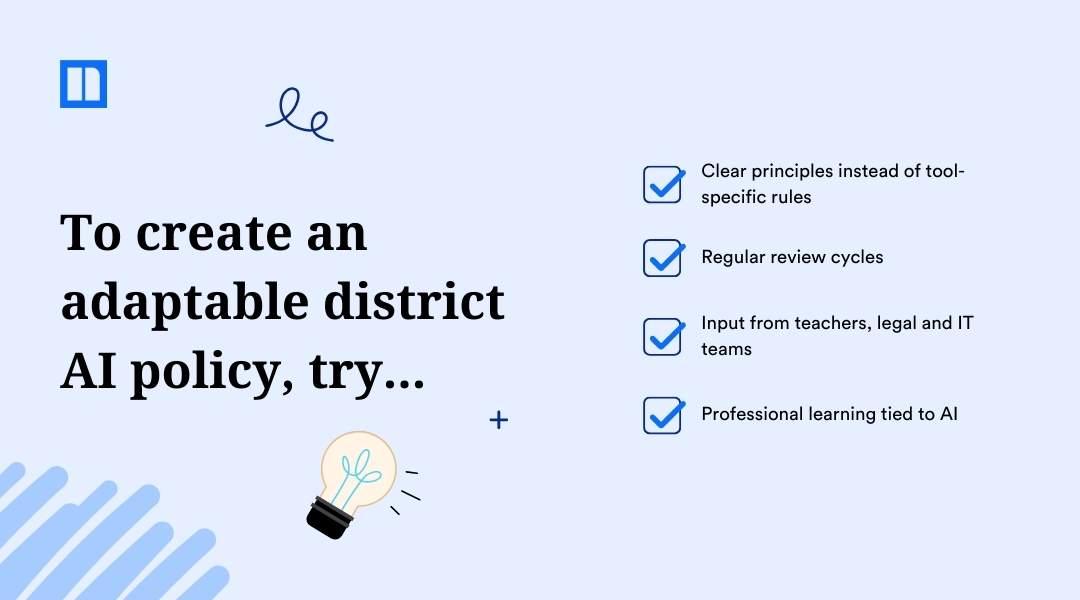
How can districts create AI policies that adapt over time?
AI tools change quickly. A policy written once and left untouched will become outdated even faster. Districts benefit from flexible policies that you review regularly. Strong, adaptable AI policies often include:
Clear principles instead of tool-specific rules.
Regular review cycles as technology evolves.
Input from educators, legal, and IT teams.
Professional learning is tied directly to AI expectations.
How can a district evaluate AI tools before adopting them?
With so many AI-powered tools on the market, one of the biggest challenges districts face is deciding which tools are appropriate for classrooms. Not all AI tools are designed for learning, and not all of them protect student data or support instructional goals.
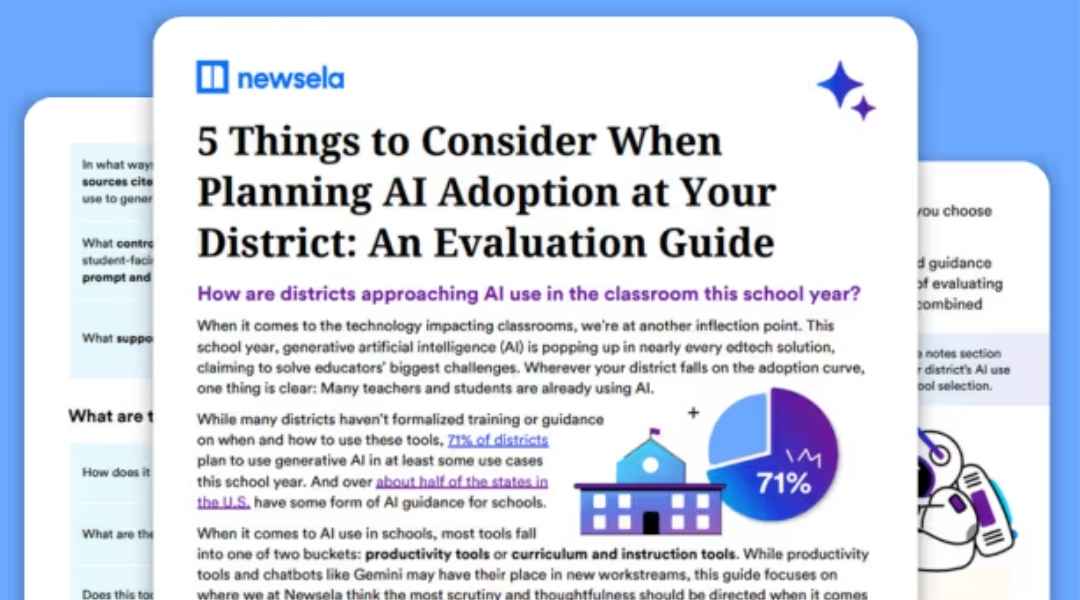
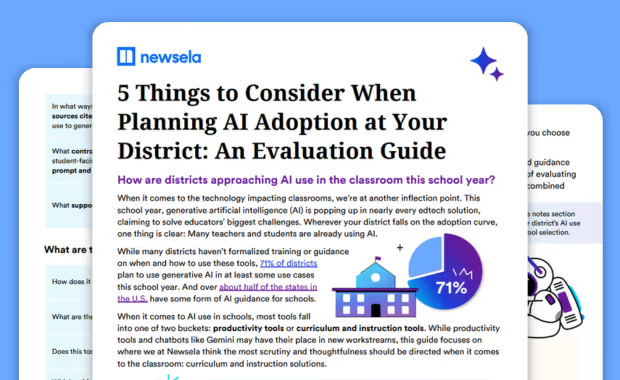
To support this decision-making process, we’ve created an AI adoption evaluation guide, which provides a practical framework you can use to review AI-powered curriculum and instruction tools before adoption.
This guide encourages districts to ask key questions, including:
How does this tool support student learning goals?
Does this tool truly save teachers meaningful time?
How easy is this tool to use for teachers and students?
How does this tool support equitable access to learning?
How does this tool protect student data and privacy?
Using a shared evaluation framework helps districts make more consistent decisions, reduces risk, and removes pressure from individual teachers to evaluate tools on their own.
[Building AI literacy for students and educators](id-tips)
Key takeaways:
AI literacy helps students think critically beyond just using the tools.
Educators need clear support and training to teach AI responsibly.
District-wide resources help create consistent expectations across schools.
AI literacy isn’t about teaching students how to use tools faster. It’s about helping them understand how AI works, where it can help, and where it can be misleading. For districts, AI literacy creates a shared foundation, so students and educators know how to use AI responsibly and thoughtfully.
Why is AI literacy now part of digital citizenship?
Students already encounter AI in school, online, and in everyday life. Without guidance, it can be hard for them to tell when AI is helping and when it’s misleading. National guidance highlights AI literacy as an important part of preparing students to participate safely and responsibly in a digital world.
AI literacy helps students learn to:
Question AI responses instead of accepting them as fact.
Check sources for accuracy.
Understand limits and bias in AI-generated content.
Use AI ethically without replacing their own thinking.
When districts include AI literacy in digital citizenship, students receive clear, consistent messages about responsible use.
How can schools integrate AI literacy across subjects?
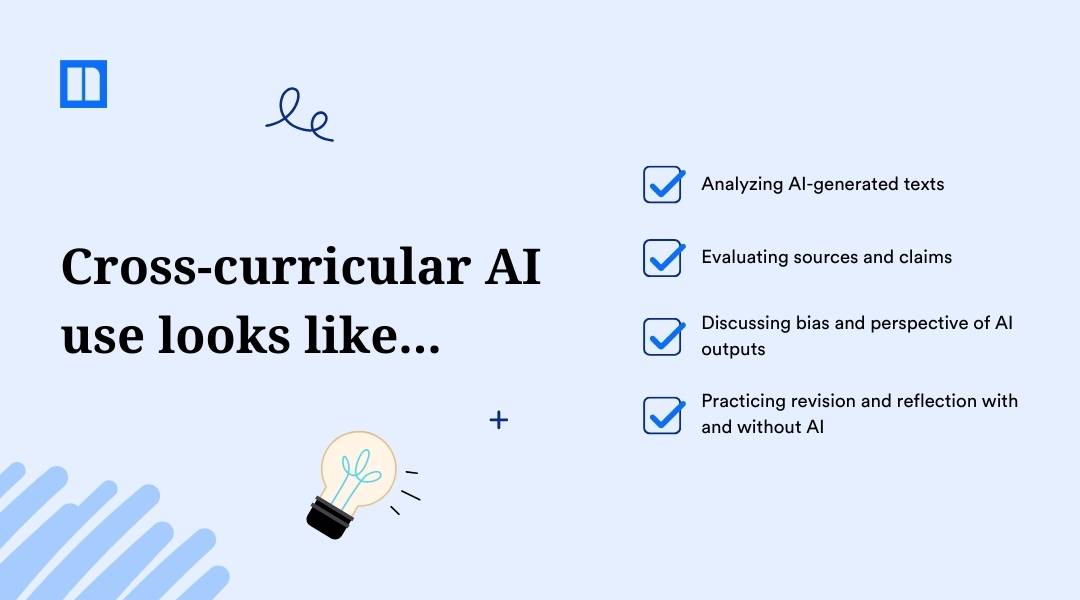
AI literacy doesn’t need to be a standalone course. Teachers can build it into existing instruction across ELA, science, and social studies. This approach helps students apply their understanding of AI in real learning contexts. Effective integration often includes:
Analyzing AI-generated text during reading and writing lessons.
Evaluating sources and claims in science and social studies.
Discussing bias and perspective when reviewing AI outputs.
Practicing revision and reflection with and without AI support.
Cross-curricular integration helps students see AI as a tool for evaluation, not a shortcut to answers.
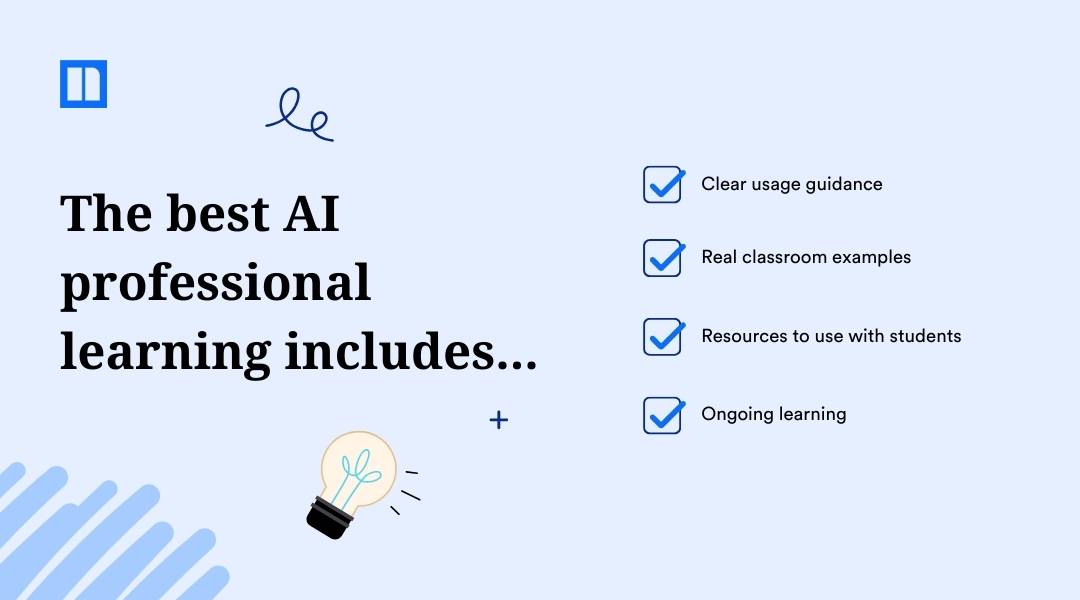
Where does professional learning fit into AI literacy?
Resources teachers can use directly with students.
Ongoing learning, not one-time sessions.
Providing shared tools and lessons reduces confusion and helps educators focus on instruction instead of enforcement.
How can Newsela support AI literacy at the district level?
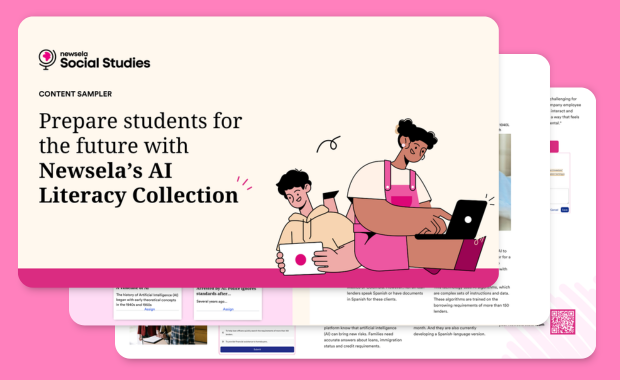
Districts benefit from AI literacy resources that are age-appropriate, standards-aligned, and easy for teachers to use. The Newsela Social Studies AI Literacy Collection supports this work by helping students explore how AI works, where it shows up in society, and why responsible use matters.
This collection helps districts:
Introduce AI concepts with trusted, instructional content.
Support discussion and critical thinking, not tool use alone.
Create consistency across classrooms and grade levels.
By pairing clear district guidance with shared instructional resources, schools can build AI literacy that supports learning and prepares students for a world shaped by AI.
[How Newsela supports responsible AI in schools](id-newsela)
Key takeaways:
Newsela’s AI tools are designed for classrooms, not general-purpose use.
Educators stay in control, with AI supporting, not replacing, instruction.
We protect student data to help districts meet privacy expectations.
For districts, the goal is not to use as many AI tools as possible. It’s to use AI in ways that support learning, protect students, and give educators clear guardrails. Newsela’s approach to AI is built around those priorities, with tools designed for classroom use and district oversight.
How does Luna support educators while keeping educators in control?
Luna is Newsela’s AI-powered assistant designed specifically for educators. Unlike open AI tools, Luna works within Newsela’s instructional environment to help teachers save time while keeping professional judgment front and center.
For districts, this matters because Luna supports efficiency without removing oversight. Teachers remain responsible for instructional decisions, and AI is the support tool, not the authority.
Why does Newsela’s approach to data privacy matter for districts?
Data privacy is a top concern for school and district leaders. Newsela’s AI tools are built with student privacy in mind and are designed to operate within a protected instructional platform. Key privacy considerations include:
AI tools are embedded within Newsela’s secure environment.
Districts maintain control over how tools are used.
This approach helps districts balance innovation with responsibility. It reduces risk while still supporting educators.
Where does Newsela fit into a district’s broader AI strategy?
Newsela’s AI tools aren’t a replacement for district policy or leadership. Instead, they support your strategy by providing tools and content that align with responsible AI use. Together, Luna and the AI Literacy Collection help districts:
Support teachers with safe, instructional AI tools.
Build AI literacy without adding new platforms.
Reinforce district expectations through shared resources.
These tools and resources allow you to lead AI adoption with clarity, consistency, and confidence.
Lead AI adoption in your district with purpose
AI is already part of K-12 education. The question for districts isn’t whether they’ll use AI, but how they’ll guide the implementation. When you leave AI decisions to chance, expectations become unclear, and risks increase. When districts lead with clear policies, shared tools, and strong AI literacy, you can support learning with AI instead of undermining it.
As a school or district leader, you play a key role in setting that direction. Thoughtful governance, consistent expectations, and trusted instructional resources help educators and students use AI responsibly. With the right guardrails, AI becomes a tool to support instruction and prepare learners for a future shaped by technology.
Newsela supports responsible AI use in schools with tools designed for educators and districts. Luna helps teachers save time while staying in control. Our AI Literacy Collection provides classroom-ready resources to help students think critically about AI.
You can try these great features and more by signing up for a free 45-day trial to explore how Newsela’s products support AI literacy, instructional quality, and responsible AI use across your district.
Everything you need to accelerate learning across ELA, social studies, and science
Browse more educational and seasonal content from Newsela.
Blog
Newsela's Philosophy on AI tools in education
At Newsela, we believe the best education solutions power great teaching, they don't replace it. Learn more about our philosophy on AI tools in education.


 Products Overview














.avif)



.avif)