Newsela launched in 2013 with a bold mission: Meaningful classroom learning for every student. Today, our team constantly strives to deliver powerful solutions that inspire our users.
World Forest Day is March 21. It’s a great chance to help students learn why forests matter and how they support life on Earth. You can bring lessons into science, ELA, or social studies without overhauling your plans.
These World Forest Day activities help you build background knowledge, spark questions, and support reading and discussion. They work across grade levels and fit easily into lessons you’re already teaching this time of year.
Easy science tie-ins let you connect forests to Earth science and life science standards.
Visual and interactive resources help students grasp how forests function as systems.
Real-world examples make abstract concepts like growth, habitats, and data patterns more concrete.
Flexible lesson starters work as bell ringers, short investigations, or extension activities.
Forest content makes it easy to teach systems, patterns, and observation skills. You can use these resources to talk about habitats, growth, and change without diving into a full science unit. These activities help students look closely, ask questions, and connect ideas they’re already learning in class.
Why was World Forest Day created?
World Forest Day gives students a reason to learn why forests matter and how they change over time. In science class, it works as a hook for studying forest structure, growth, and how people affect natural systems.
To build that understanding, use resources that show how forests are organized and how they interact with their surroundings:
Read an article that explores the layers of a forest, from the leaves to the soil.
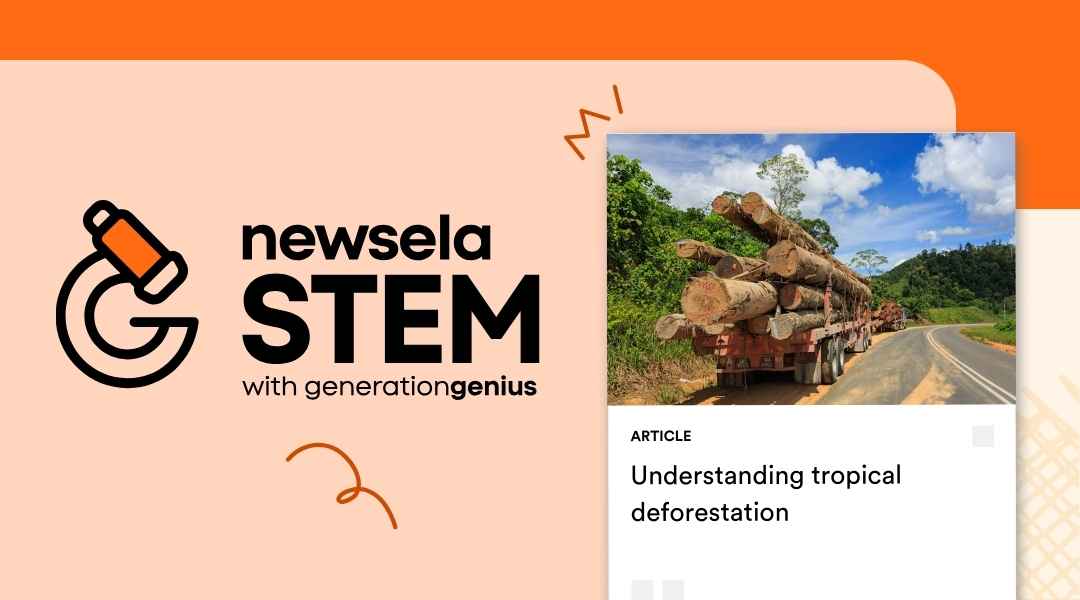
Deforestation changes habitats and land systems. That makes it useful for teaching cause and effect, ecosystem balance, and how changes in one place affect others.
To help students understand what’s happening and why, use resources that explain the science clearly:
How can a virtual forest field trip support science learning?
A virtual forest field trip lets students explore a real place they might never visit. It helps them practice observing details, reading maps, and recording what they notice.
To keep students focused and active during the virtual trip, use resources that guide what they look for:
Share a printable journal for students to record their observations.
Explore the interactive forest paths to learn how forests sustain life, grow, and adapt to environmental changes.
What can tree rings tell scientists?
Tree rings show how old a tree is and what growing conditions were like in the past. They help students see how scientists use natural evidence to study patterns over time. To explore this idea, use resources that connect tree rings to real research:
Explore how tree rings helped scientists learn more about the rise of Genghis Khan in Mongolia.
Why do some trees grow in unusual shapes?
Some trees grow in unexpected ways because of wind, soil, space, or damage over time. This makes them a good example of how living things adapt to their surroundings.
To get students thinking and noticing details, use resources that focus on real examples:
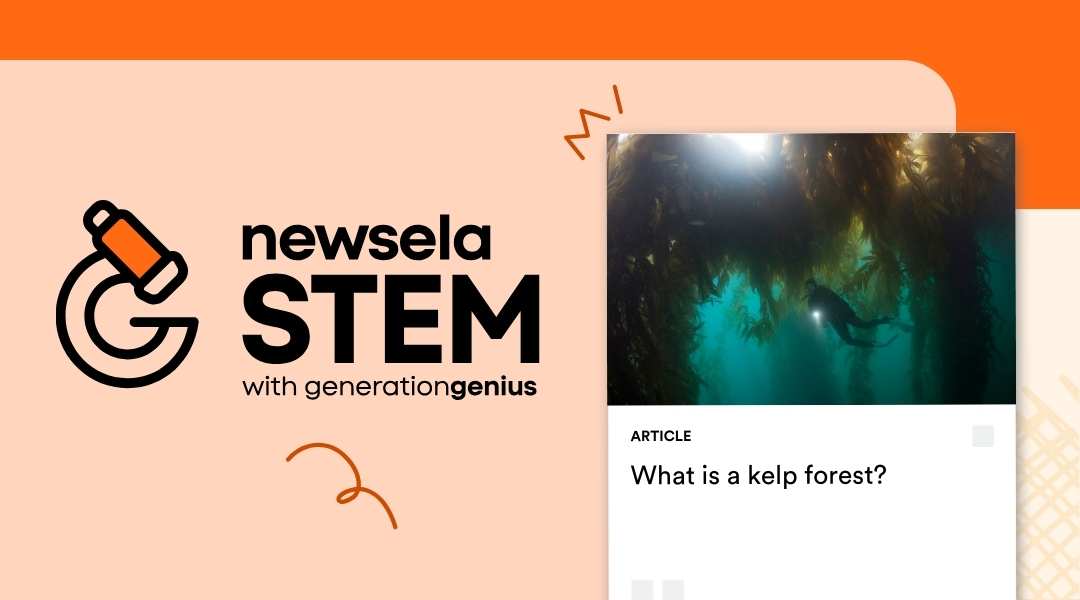
What are kelp forests, and how are they similar to land forests?
Kelp forests show students that the woods aren’t just on land. They help students compare how different ecosystems are structured and how living things depend on each other.
To help students make those connections, use resources that explain underwater forests clearly:
How can science news help students connect forests to the real world?
Current events show students that forest science isn’t just something from a textbook. It’s happening now, and people are actively studying and restoring forest ecosystems.
To walk students through the topic step by step, use a short lesson sequence:
First, do a 3-2-1 bridge activity and write down three words, two questions, and one metaphor or simile to represent what they think of when they hear about deforestation.
Finally, ask students to create a poster to share what they learned about the Atlantic Forest. The poster should include a creative title, quotes from the article, visuals, facts, and ideas.
How can math support forest science learning?
Forest science often depends on measurement and data. That makes it an easy place to bring math into science without forcing it. To connect math skills to real data, use resources that combine reading and calculation:
Complete the Reflect and Respond worksheet to answer questions like “Why might scientists need to measure circumference?” or “What does it mean that the trees’ size increased by about 3.3% every 10 years?”
Extend the lesson by doing a math activity that asks students to find the circumference of a tree trunk 1 meter in diameter and how the circumference would change if the trunk increased by 3.3 percent over 10 years.
When should you use videos for World Forest Day science lessons?
Videos work well when students need to see processes or structures that are hard to picture from text alone. They’re especially useful as lesson openers, quick refreshers, or discussion starters.
Using Newsela STEM with Generation Genius videos helps you keep lessons visual while still supporting science standards. Try these video selections:
[World Forest Day ELA reading and writing activities](id-ela)
Key takeaways:
Forest texts build the background knowledge students need to understand science and social studies topics later.
Short fiction and nonfiction reads make it easy to tie World Forest Day to your regular ELA block.
Paired texts and poems help students practice comparing ideas, themes, and author choices.
Low-prep reading and writing tasks support discussion, analysis, and evidence use without extra planning.
Forests show up naturally in stores, poems, and informational texts. That makes World Forest Day an easy fit for ELA lessons. You can use it to build knowledge, practice close reading, and get students writing without pulling time from core skills.
What can students learn about trees through nonfiction reading?
Nonfiction texts about trees help students learn facts while practicing key ELA skills, such as identifying main ideas, details, and text structure. To support that learning, use resources that focus on real examples:
How can rainforest texts build background knowledge in ELA?
Rainforest content helps students learn about complex environments while practicing reading skills. It gives students shared knowledge they can use later in science and social studies. To build that background knowledge, use resources that answer common student questions, like:
How do poems about forests help students analyze language and theme?
Poems about forests give students a chance to study imagery, mood, and theme using familiar natural settings. They also work well for close reading and discussion. To explore how one poet, Robert Frost, uses forests in his work, explore texts like:
How can paired texts help students compare ideas about forests?
Paired texts let students compare how fiction and nonfiction approach the same topic. This helps them practice analyzing ideas, purpose, and tone across texts.
To guide that comparison, use resources that show different perspectives:
Read a nonfiction article about people spending time in forests to unplug through “forest bathing.”
Complete a paired text analysis worksheet to answer the question: “How are the ideas from the articles similar or different?”
[World Forest Day social studies activities](id-ss)
Key takeaways:
Forests provide real geographic context for studying regions, land use, and human activity.
Place-based texts help students connect maps, locations, and resources to real people and places.
Current and historical examples support discussions about how humans interact with their environment.
Short social studies reads make it easy to integrate World Forest Day without adding a new unit.
Forests play a big role in how people live, work, and use land. In social studies, they help students connect geography, resources, and human activity in a concrete way. These activities focus on location, place, and how people interact with forested regions around the world.
Explore the Amazon Rainforest
The Amazon Rainforest helps students connect geography, natural resources, and human activity. It works well for studying regions, land use, and how people interact with the environment.
To build that understanding, use resources that focus on place and impact:
World Forest Day gives you an easy way to build background knowledge across subjects without adding extra prep. You can use these activities as quick lesson starters, short reads, or discussion prompts that fit into what you already teach.
If you want ready-to-use texts, videos, and activities for World Forest Day and beyond, sign up for your 45-day free trial of Newsela’s premium products. You’ll get access to high-quality content you can use right away.
Everything you need to accelerate learning across ELA, social studies, and science


 Products Overview